Formix Construction Inc.
ICF construction for Southern CaliforniaSolid concrete walls, insulated on both sides.
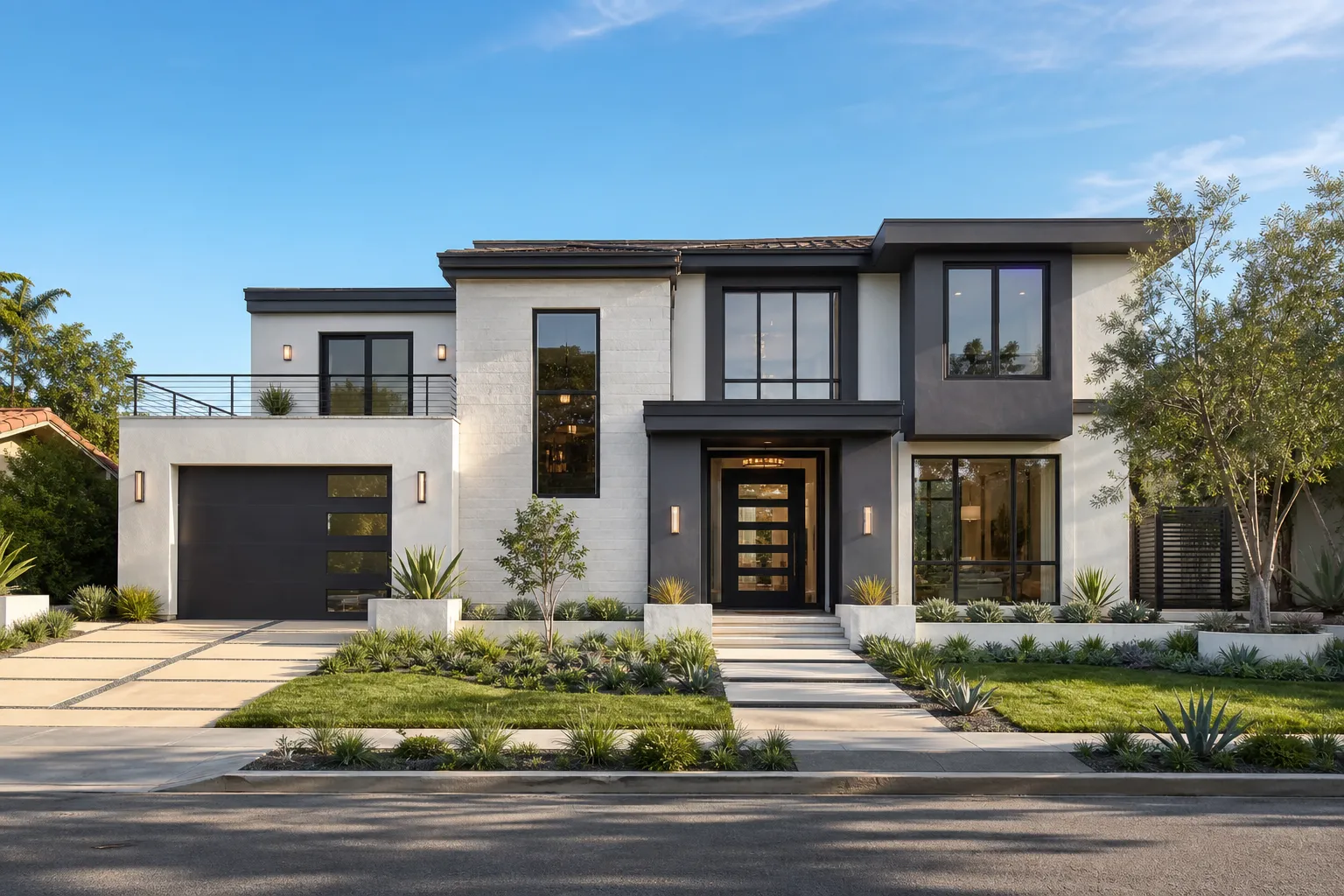
That is an ICF home. Insulated Concrete Forms are hollow foam blocks: we stack them, fill them with steel and concrete, and the foam stays on as insulation. Here is how it works in two minutes.
How ICF Works
Four steps, one solid wall
An ICF wall replaces studs, sheathing, and batt insulation with a single system that goes up in stages.
-
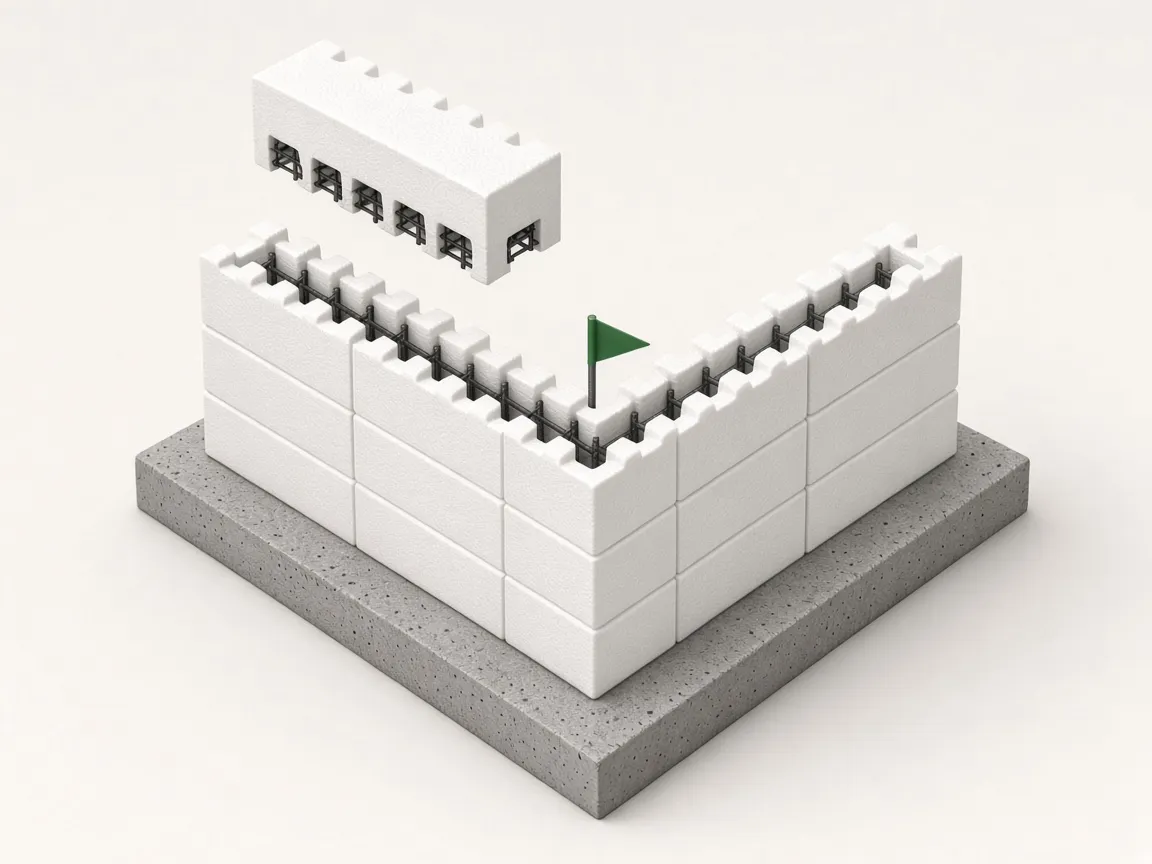
1 Stack
Hollow foam blocks lock together on the foundation to form the shape of every wall.
-
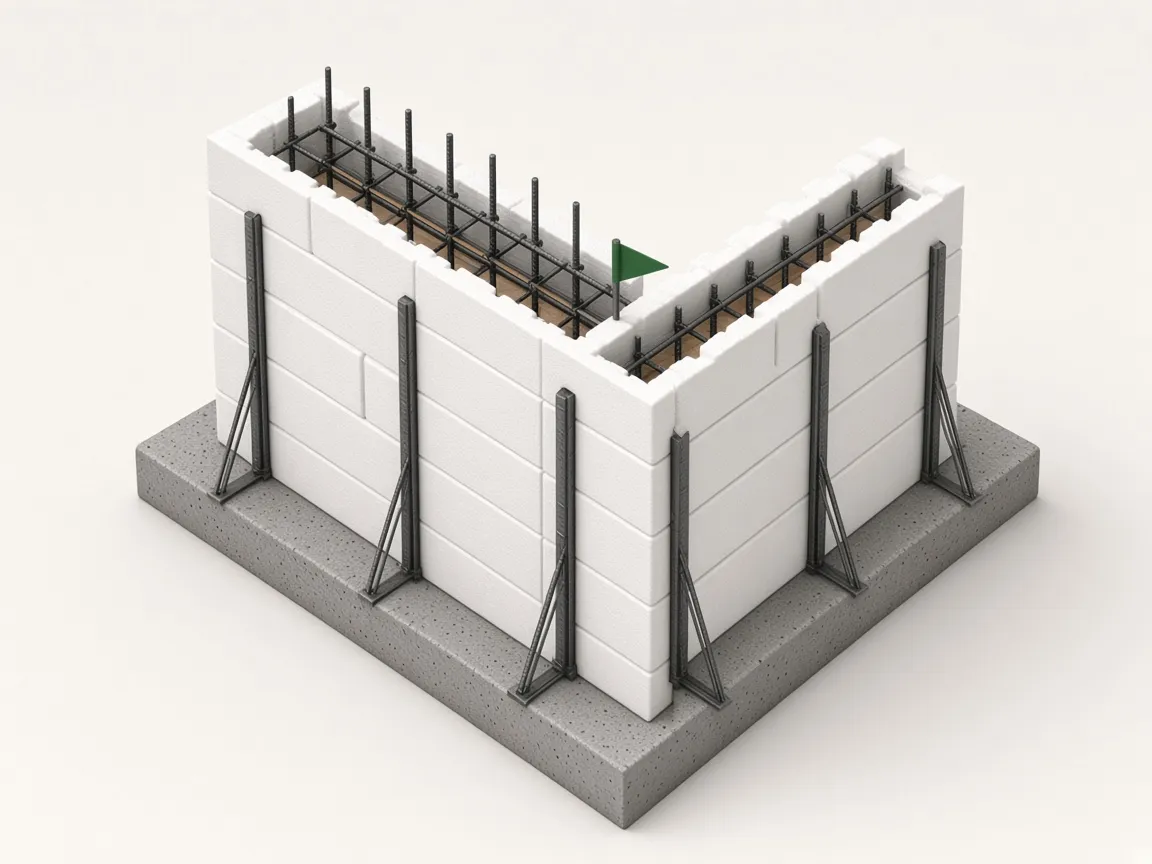
2 Reinforce
Steel rebar goes inside the hollow core, and temporary braces hold the walls straight.
-
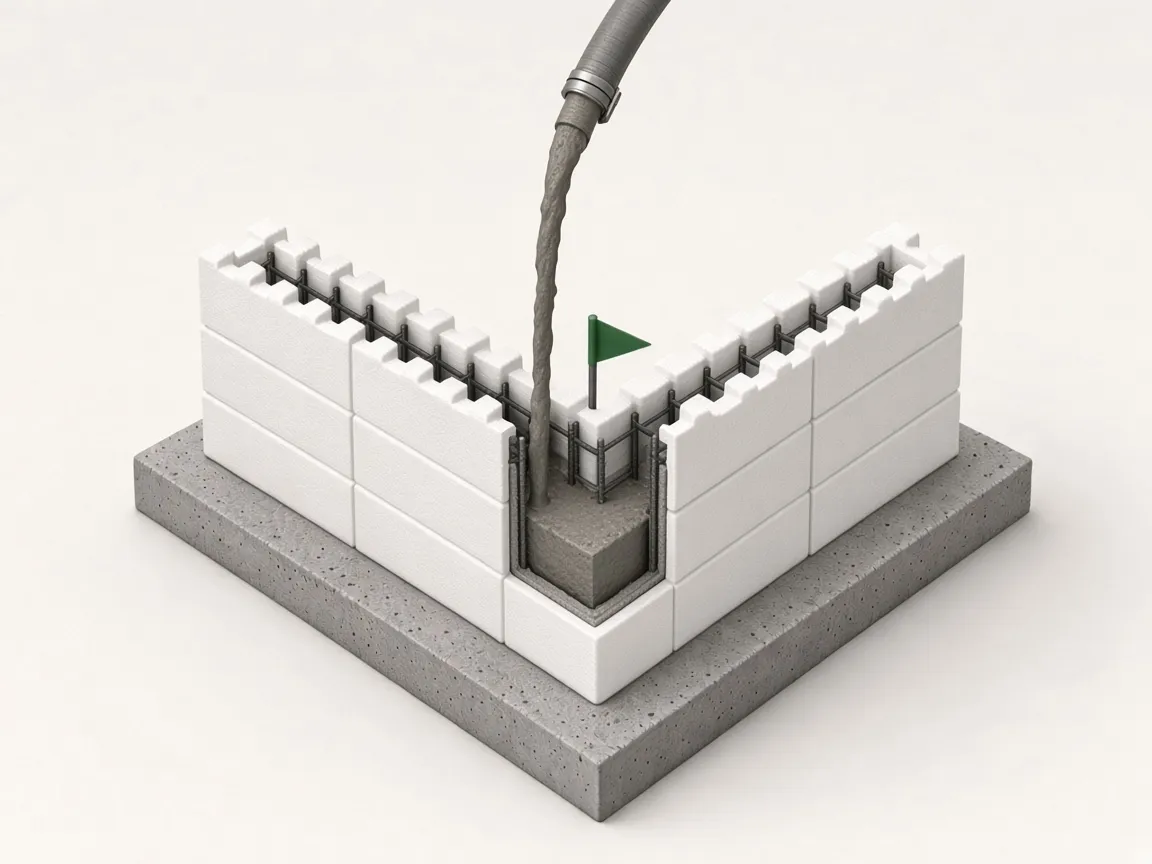
3 Pour
Concrete is pumped into the core. It hardens into one solid, reinforced wall.
-
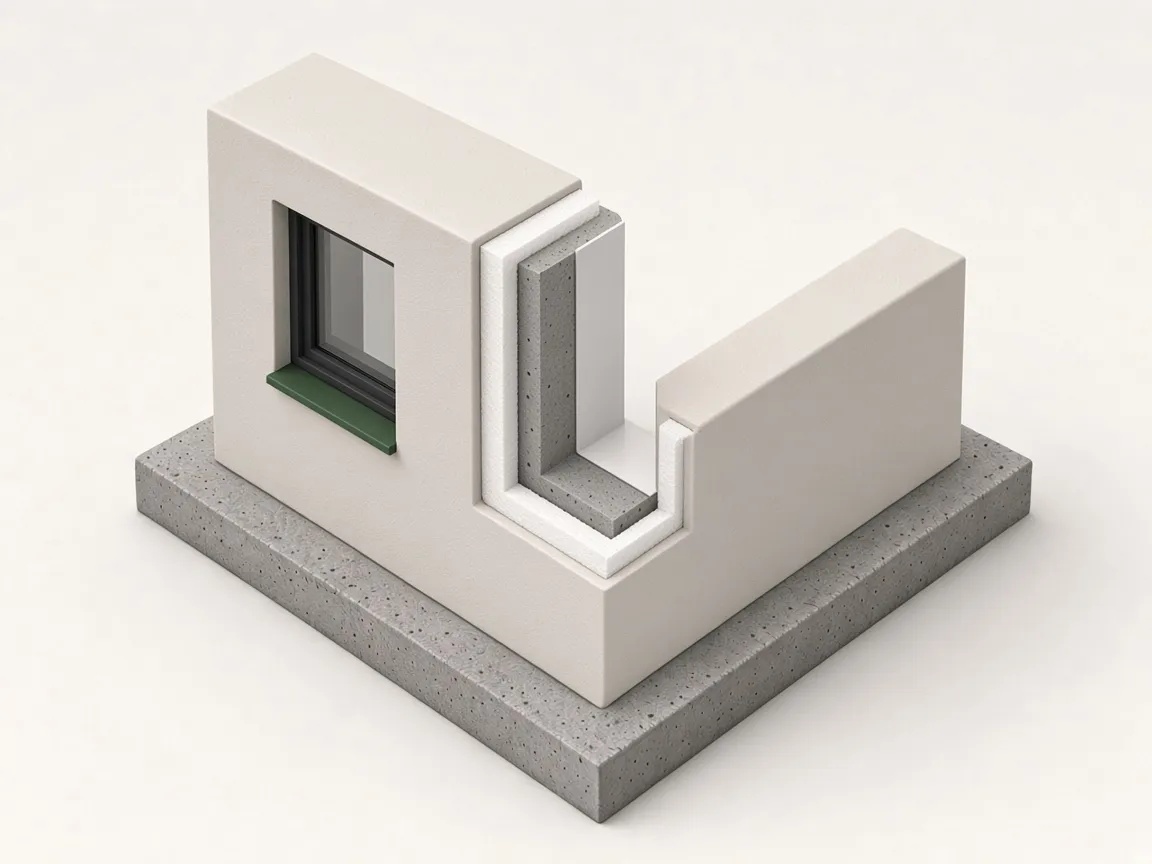
4 Finish
The foam stays as insulation. Stucco or siding goes outside, drywall goes inside.
Illustrations, simplified for clarity.
ICF vs. Wood Framing
What actually changes
Most Southern California homes are wood-framed. Here is how an ICF wall compares, and why the price usually ends up closer than people expect.
| Topic | ICF wall | Wood-framed wall |
|---|---|---|
| The wall | Solid reinforced concrete between two layers of foam | Wood studs with insulation stuffed between them |
| Insulation | Continuous foam on both sides, nothing breaking it up | Interrupted by a stud every 16 inches |
| Fire | Concrete core does not burn | Framing is combustible |
| Noise | Heavy, solid wall that dampens outside noise | Lighter wall, more sound passes through |
| Termites & rot | Nothing in the core for termites to eat | Needs protection from termites and moisture |
| Crews | One crew stacks, reinforces, and pours | Framers, sheathing, insulation, and wrap, each a separate trade |
| Cost | Materials cost more, but fewer trades and faster walls bring the total to about the same | Cheaper lumber, but every trade is a separate bill and another step in the schedule |
Finishes are the same either way: stucco, siding, or stone outside, drywall inside. Read the full breakdown
Where It Fits
Is ICF right for your project?
New custom homes
The best time to choose ICF is before the design is final, so walls and openings are planned around it.
ADUs
A quiet, efficient backyard unit with solid concrete walls instead of studs.
Additions
New rooms built with ICF walls that tie into your existing home.
Rebuilding in fire zones
If you are rebuilding after a wildfire, a non-combustible wall system deserves a serious look.
Updating a home that is already built? A remodel, repair, or new roof is handled by Formix Home, the same company.

Built for California Fire Country
Concrete walls do not ignite.
Much of Southern California sits in high and very high fire hazard severity zones. An ICF wall has a non-combustible concrete core that embers and radiant heat cannot set alight. No home is fireproof: roofs, vents, windows, and defensible space still matter. But the walls stop being the weak point.
How ICF resists fireFrom the Job Site
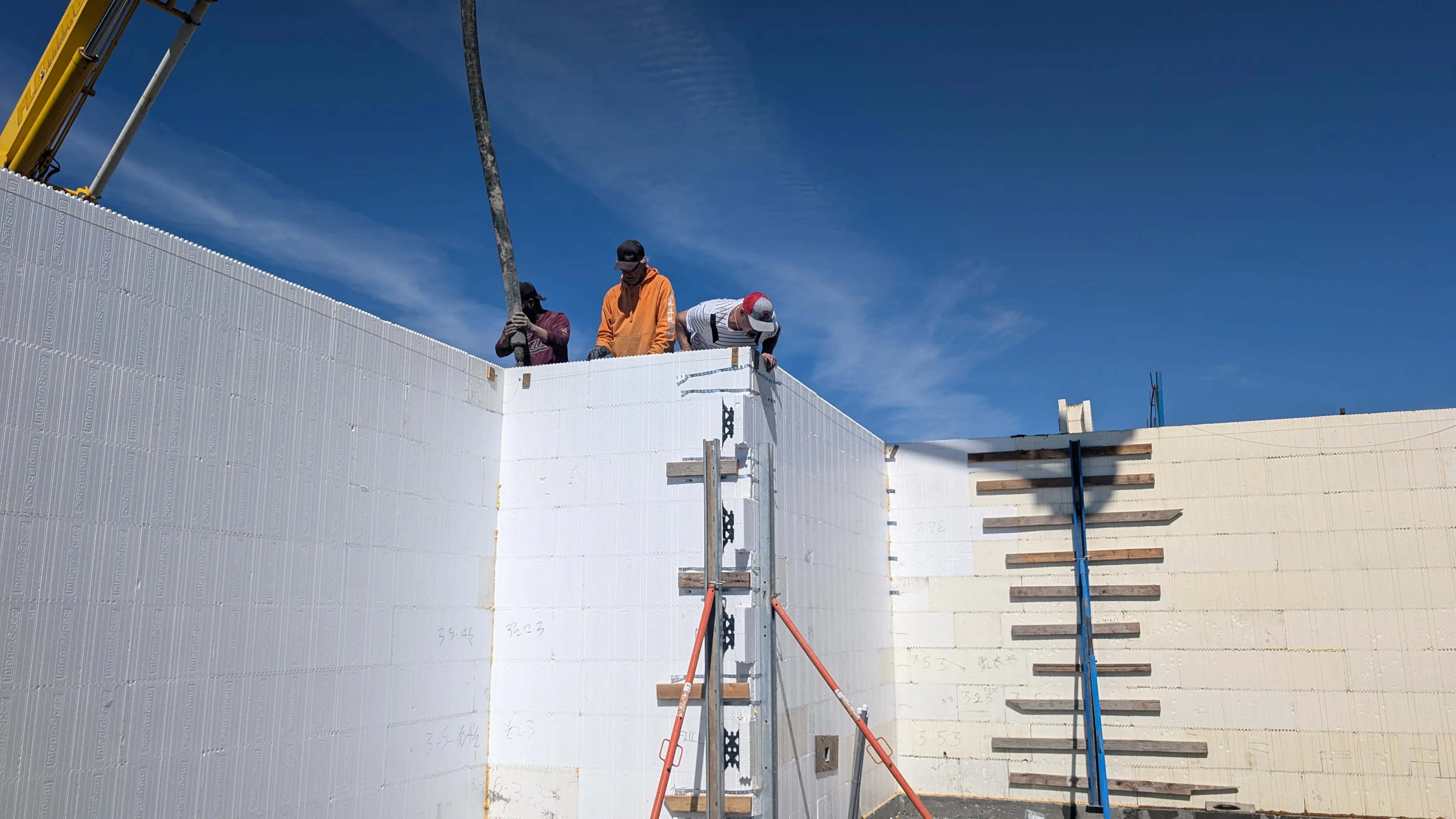
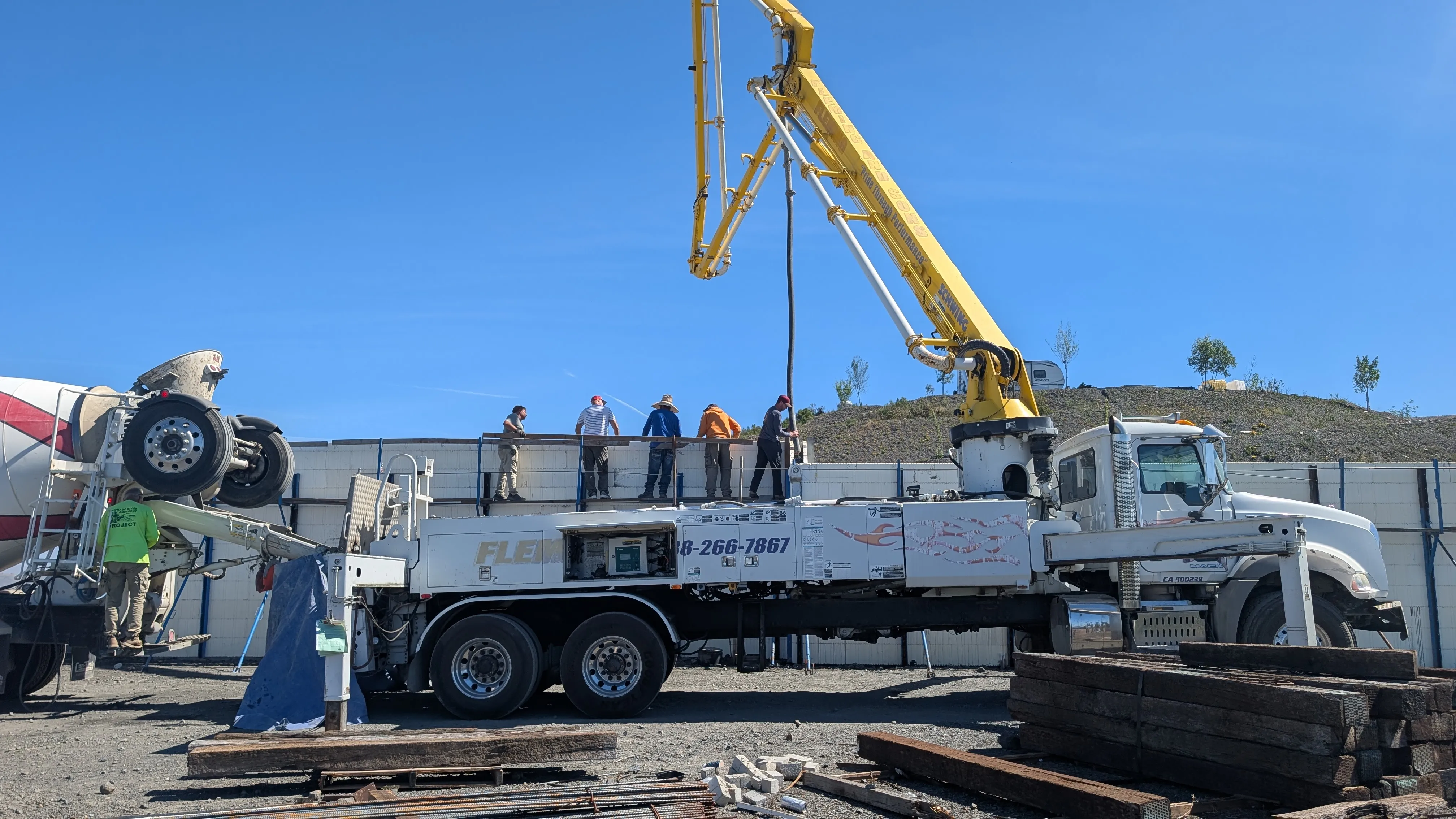
Pour day on a Formix ICF build
Unretouched phone photos from one of our Southern California job sites: the same four steps, at full size.

Questions
Common questions
Cost, looks, fire, and how to get started.
What is ICF construction?
Insulated Concrete Forms are interlocking foam panels that stay in place as insulation while reinforced concrete is poured inside. You get a solid wall with continuous insulation on both sides, instead of wood framing plus a separate insulation step.
Are ICF homes fireproof?
No home is fireproof. ICF walls are built around a non-combustible reinforced concrete core that does not ignite from embers or radiant heat the way wood framing can. Roofing, vents, windows, and defensible space still matter, especially in high fire hazard zones.
Isn’t ICF more expensive than wood framing?
Less than most people think. The foam blocks and concrete cost more than lumber, but one ICF crew replaces the framers, sheathing, and insulation installers, and the walls go up faster. By the time the walls are done, the total usually comes out about the same as a wood-framed build. After that, you keep saving on heating and cooling, and you have a wall that will not burn, rot, or feed termites.
Does an ICF house look different?
No. The foam is covered on the outside with stucco, siding, or stone, and on the inside with drywall. From the street and inside the rooms it looks like any other home. The walls are just thicker and more solid.
What kinds of projects do you build?
New homes, ADUs, and additions that use ICF wall systems. If you need a remodel, repair, roof, or other improvement to an existing home, that work is handled by Formix Home at formixhome.com.
Where do you work?
Southern California. Formix Construction Inc. is based in Pasadena and works with homeowners, builders, and developers across the greater Los Angeles region.
How do I start?
Send the project form or call (626) 381-8866. We will talk through the site, the timeline, and whether ICF is the right fit before anyone talks about a pour.
Next step
Planning a new home, ADU, or addition?
Tell us about the site and what you want to build. We will tell you plainly whether ICF is the right fit, and what it takes to build it well.